
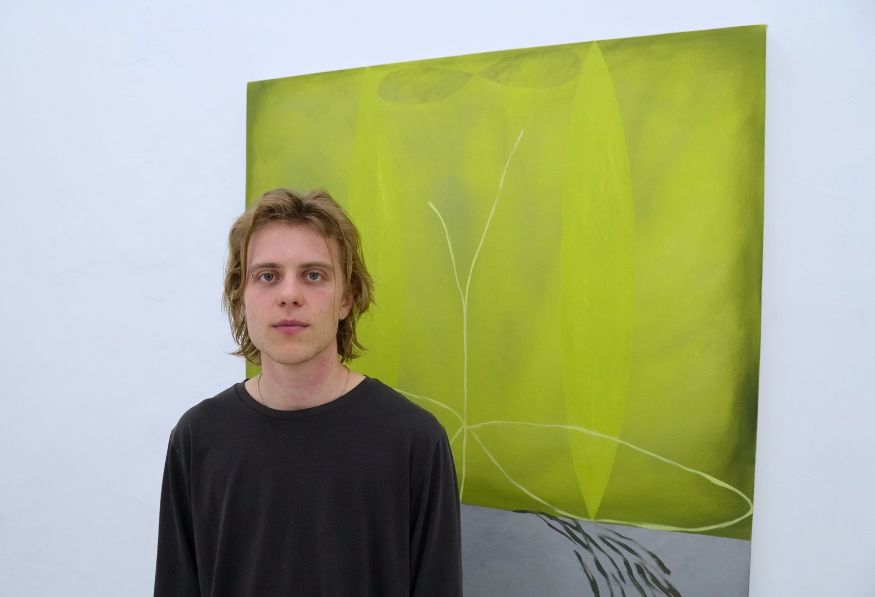

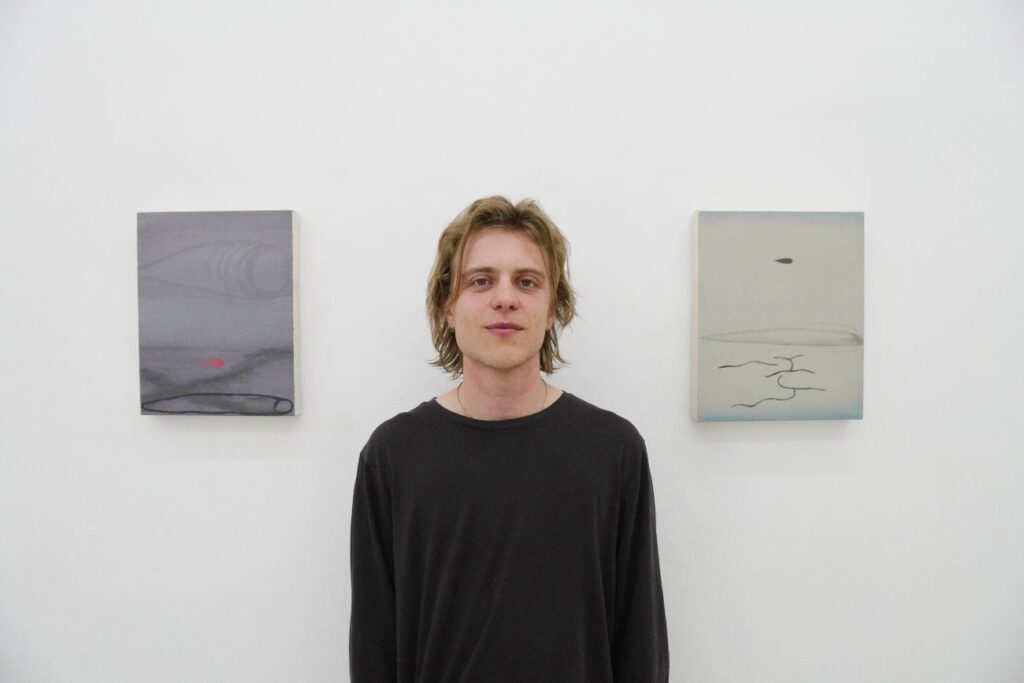
En el marco de la edición 2026 de GDL ArtWeekend, conversamos con Anzia Anderson, artista radicado en Brooklyn, sobre la pintura, los procesos y las palabras. Actualmente, Déficit Pintura es hogar de su primera exhibición en México, titulada Three Reactions.
Yaheli Hernández: Me gustaría empezar preguntándote por qué escogiste la técnica con la que trabajas.
Anzia Anderson: Desde hace siete años más o menos, la pintura realmente se convirtió en algo para mí. Tuve esa claridad: soy un pintor. Me gusta lo impredecible que es. Siento que a veces la pintura toma el control. Que te da posibilidades. Te da la oportunidad de cometer errores. Y puedes trabajar bastante rápido también. Me parece muy importante tener espacio para los errores y para las formas intuitivas que se pueden producir. Eso es muy interesante.
YH: ¿Siempre has hecho pintura abstracta?
AA: Creo que este cuerpo de trabajo es una dirección hacia la abstracción para mí. Nunca he sido puramente representacional, pero hasta hace poco lo reconocí. Sentía que necesitaba dirigir mi vista a algo muy legible. Hacer pintura abstracta es un gran descanso de ello, tengo la libertad de no explicar realmente lo que estoy haciendo. Solo estoy dejándome hacerlo. No sé cómo decirlo, pero me gusta.
YH: ¿Cómo es tu proceso?
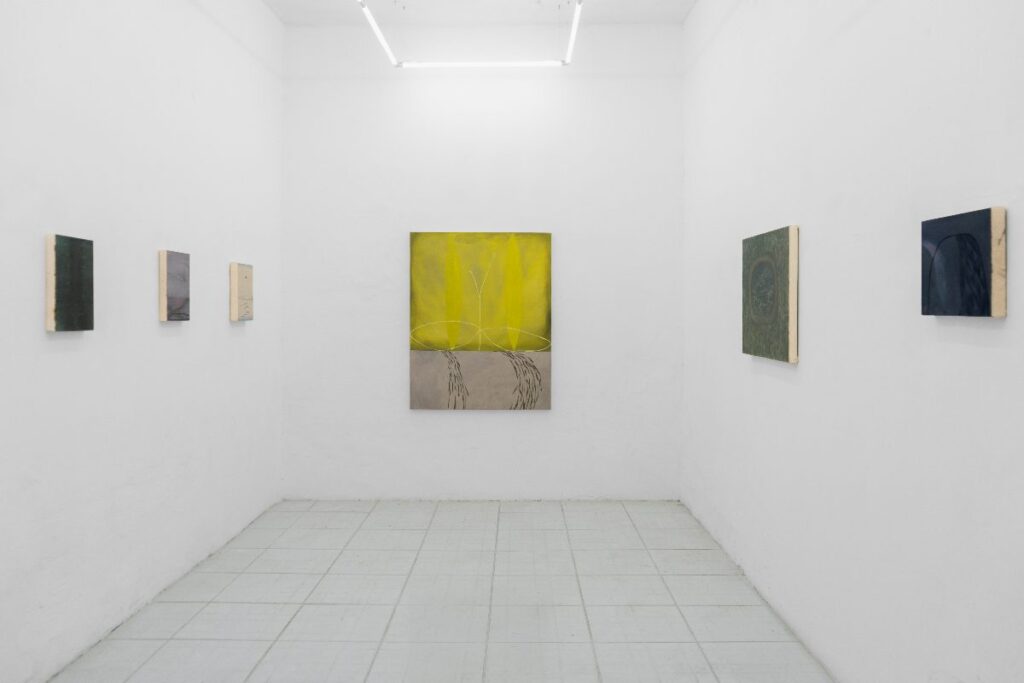
AA: Empiezo con la fotografía. Tomo muchas fotos de formas orgánicas, pero no solo de eso. Creo que mi práctica realmente empieza con una observación pura. Pienso en que tomaré un montón de fotos. No son fotografías interesantes en absoluto. No creo que sea tan preocupante de dónde vienen las imágenes. Se trata más bien de recogerlas.
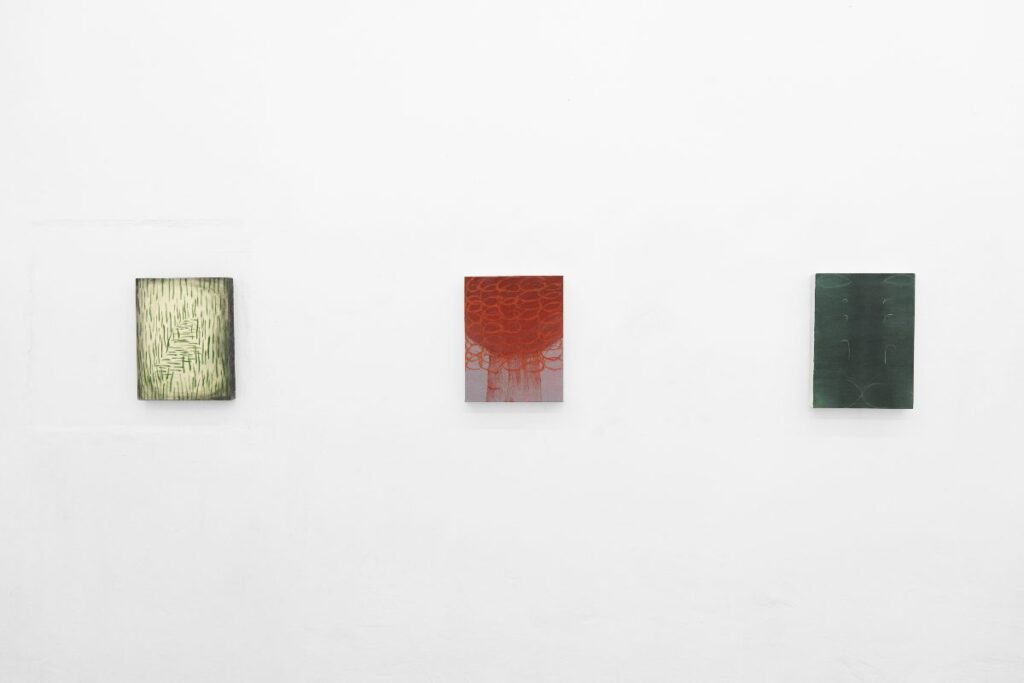
Cuando empiezo a pintar, me parece que mi pintura empieza en un lugar que se trata de color y textura. Y luego, me traigo esa imagen. Me interesa, de algún modo, abstraer mis imágenes de referencia, justo por el punto de reconocimiento. Me interesa mantener ese sentimiento de familiaridad, donde puedes mirar y sentir que sabes lo que está sucediendo. O un sentido intuitivo de que lo entiendes. Incluso si no puedes articularlo. Así que es un proceso de retirar algo y reensamblarlo.
Eso sucede en el lienzo. Luego hago un montón de dibujos, muy rápidos. Después de que tengo mis fotos, me digo: haré unos cincuenta dibujos rápidos. Y muchas veces, lo que pinto va a venir de las formas que aparecieron en esos dibujos.
YH: Cuando veo tus pinturas, como espectadora, tengo la sensación de que algo se esconde en el lienzo y que lo tengo que encontrar. ¿Hay algún lenguaje de abstracción que tratas de mostrar u ocultar?
AA: Siento que es un delicado equilibrio todo el tiempo. Es como una línea muy fina entre compartir y no compartir. O explicar y no explicar. Me interesa la interpretación equivocada o simplemente la interpretación. No es muy frecuente que alguien sepa con qué estoy trabajando. Pero me interesa una interpretación más expansiva. Me encanta cuando la gente ve mis pinturas y ve algo en lo que yo no estaba pensando, porque sí se convierte en eso.
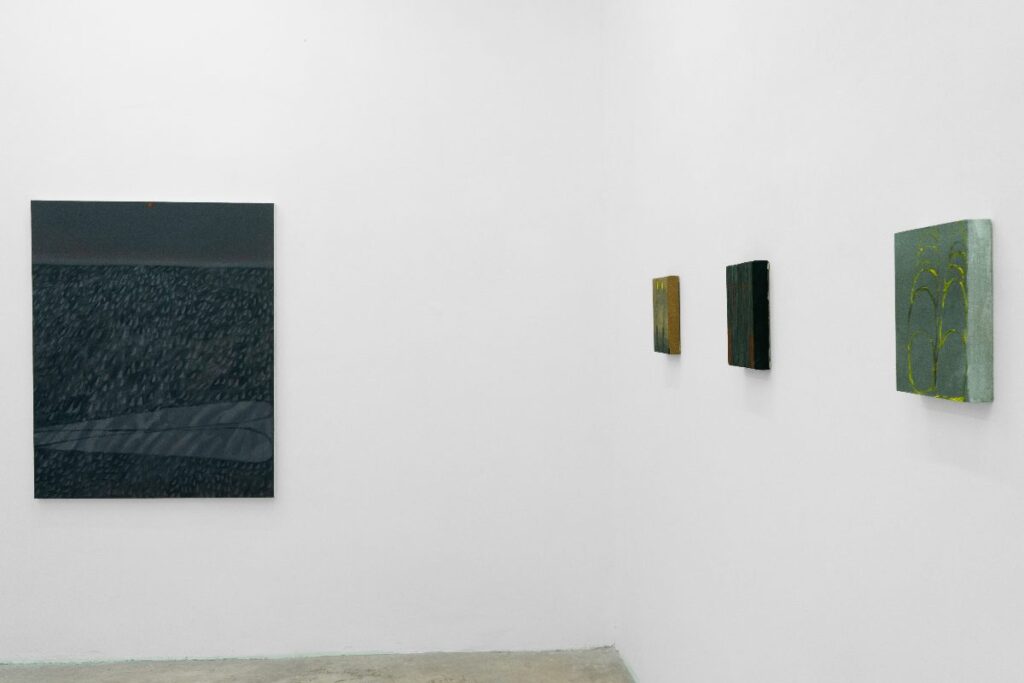
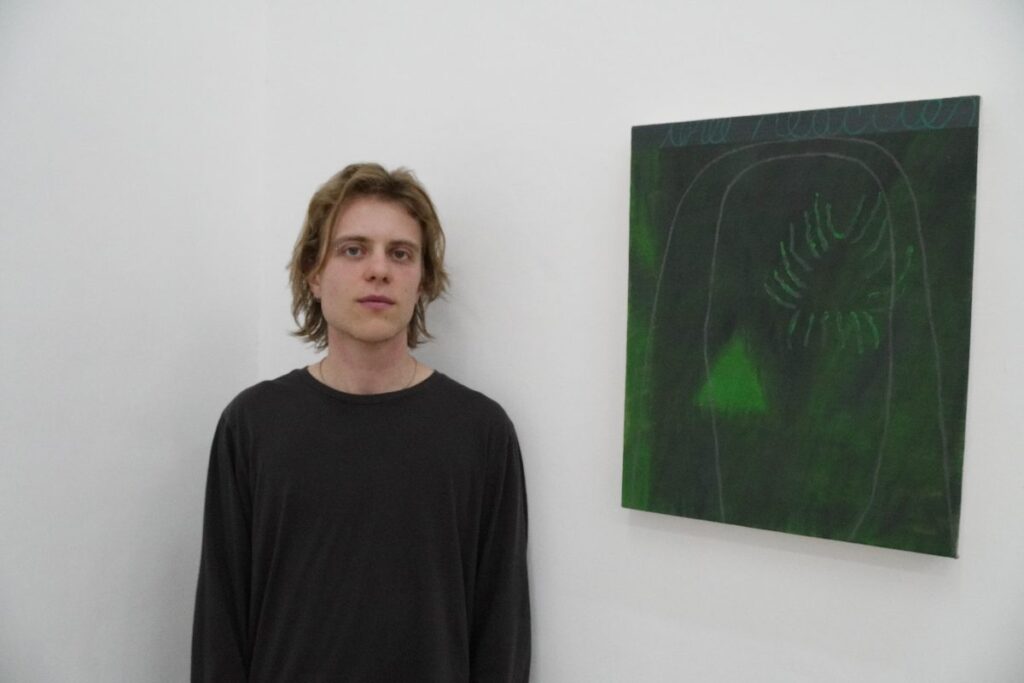
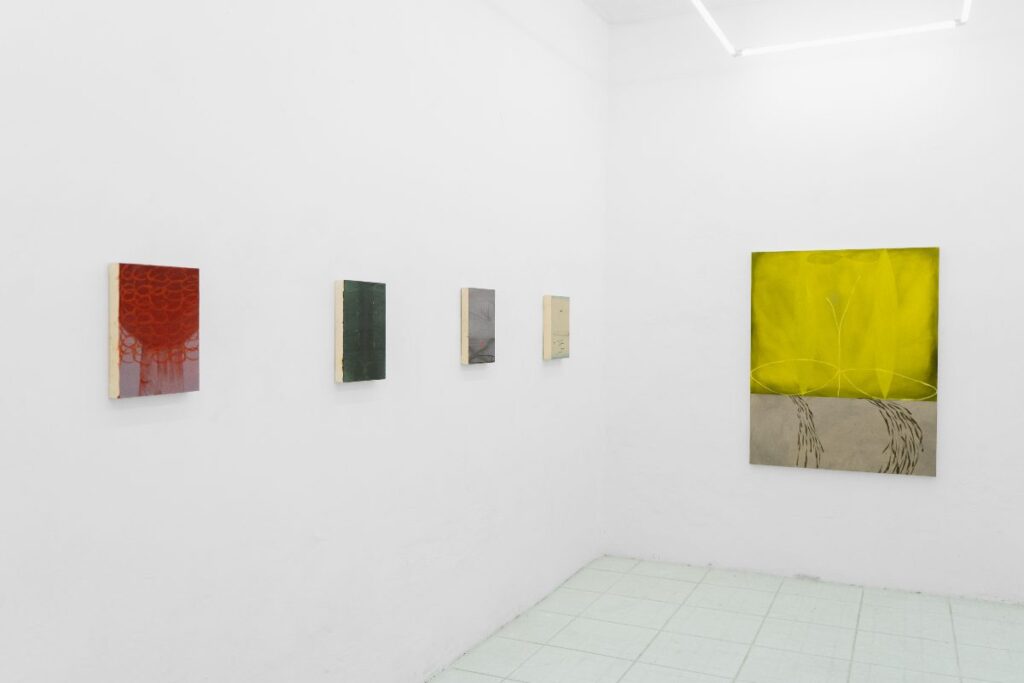
A veces el color tiene una relación con la imagen original, pero a menudo no la tiene. Me gusta el efecto del gris en los otros colores. Siento que el contraste entre el gris y otro color crea un efecto fluorescente. En el gris hay mucha sutileza y pequeñas variaciones que pueden traer cosas. Casi que los hacen brillar. Así que uso mucho gris ahora.
Anzia Anderson
YH: ¿Cómo se inserta la serie Three Reactions en Déficit Pintura?
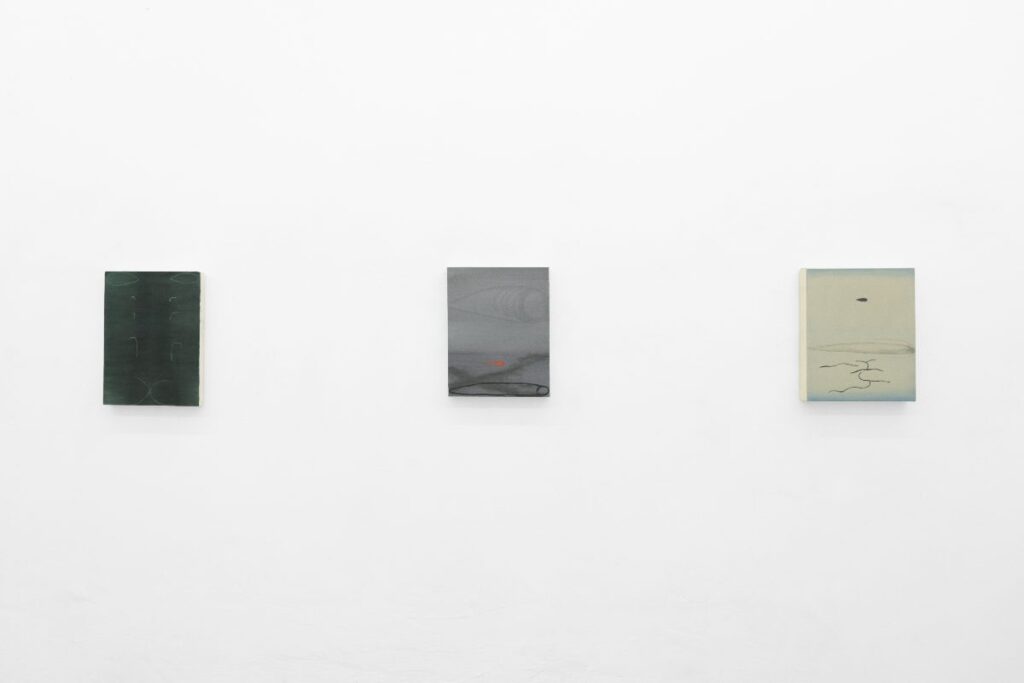
AA: El título vino de una colaboración que hice con una poeta en una residencia durante el verano. Ella escribió el texto que acompaña la exposición. Tuvimos una especie de ida y vuelta al compartir ese proceso observacional de tomar imágenes que luego trabajamos de la misma fuente. Así que la frase three reactions vino de un poema que estaba describiendo una pintura.
En esta colaboración surgieron muchas preguntas sobre legibilidad en relación a la lengua. Me sentí muy conectado con lo que estoy haciendo ahora con la pintura: cómo revelar mucho y cómo crear una sensación lógica o crear un sentimiento de que entiendes algo sin explicarlo todo.
A veces siento que mi trabajo está dividido en tres pasos. El número tres aparece de alguna forma en mi pintura. Así que me sentí conectado en varias formas diferentes. Es difícil poner palabras en una pintura. Ahora sé que existe un diálogo con ellas. Es fascinante.

English version
Anzia Anderson: «I’m interested in expansive interpretations in painting»
As part of the 2026 edition of GDL Art Weekend, we spoke with Anzia Anderson, a Brooklyn-based artist, about painting, processes, and words. Currently, Déficit Pintura is home to his first exhibition in México, titled Three Reactions.
Yaheli Hernández: I’d like to start by asking why you chose the technique you work with.
Anzia Anderson: For about seven years now, painting has really become something for me. I had that clarity: I’m a painter. I like how unpredictable it is. I feel like sometimes painting takes control. It gives you possibilities. It gives you the opportunity to make mistakes. And you can work quite quickly as well. I think it’s very important to have space for mistakes and for the intuitive forms that can emerge. That’s very interesting.
YH: Have you always done abstract painting?
AA: I think this body of work is a move toward abstraction for me. I’ve never been purely representational, but I only recognized that recently. I felt like I needed to direct my gaze toward something very legible. Making abstract painting is a great relief from that—I have the freedom not to really explain what I’m doing. I’m just letting myself do it. I don’t know how to say it, but I like it.
YH: What is your process like?
AA: I start with photography. I take a lot of photos of organic forms, but not only that. I think my practice really begins with pure observation. I go in thinking I’ll take a bunch of photos. They’re not interesting photographs at all. I don’t think it’s that important where the images come from. It’s more about collecting them.
When I start painting, it feels like my work begins in a place focused on color and texture. Then I bring in that image. I’m interested, in some way, in abstracting my reference images right at the point of recognition. I’m interested in maintaining that sense of familiarity, where you can look and feel like you know what’s happening. Or an intuitive sense that you understand it—even if you can’t articulate it. So it’s a process of removing something and reassembling it.
That happens on the canvas. Then I make a lot of drawings, very quickly. After I have my photos, I tell myself: I’ll make about fifty quick drawings. And many times, what I end up painting comes from the forms that appeared in those drawings.
YH: When I look at your paintings, as a spectator, I get the feeling that something is hidden in the canvas and that I have to find it. Is there a language of abstraction that you try to show or conceal?
AA: I feel like it’s a delicate balance all the time. It’s like a very fine line between sharing and not sharing. Or explaining and not explaining. I’m interested in misinterpretation—or simply interpretation. It’s not very common for someone to know what I’m working with. But I’m interested in a more expansive interpretation. I love it when people look at my paintings and see something I wasn’t thinking about, because then it does become that.
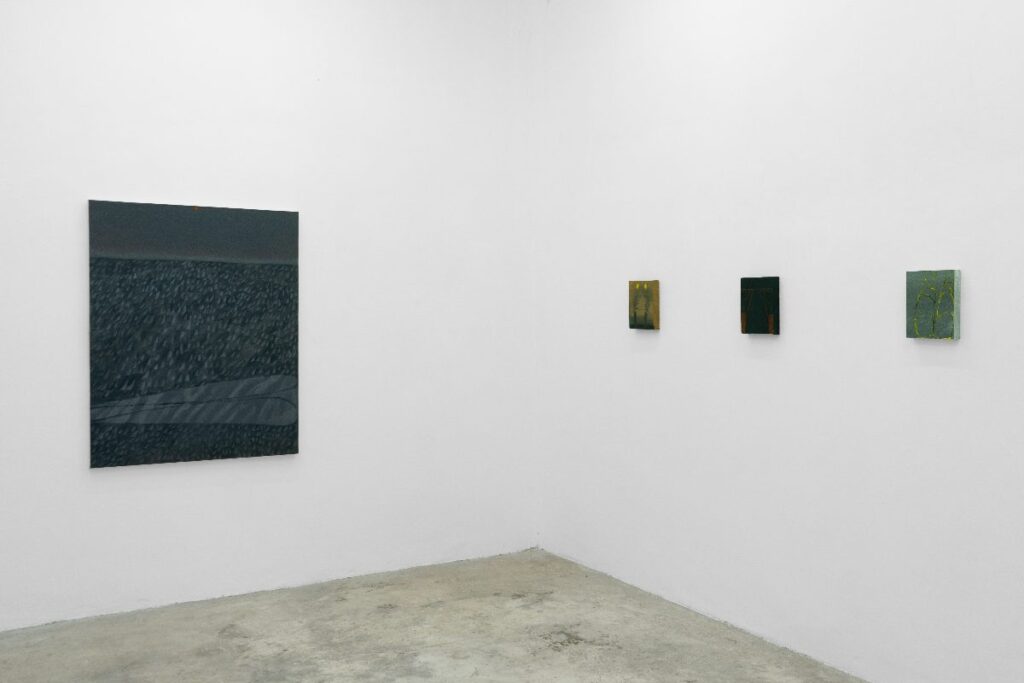
Sometimes color has a relationship to the original image, but often it doesn’t. I like the effect of gray on other colors. I feel like the contrast between gray and another color creates a fluorescent effect. There’s a lot of subtlety in gray and small variations that can bring things out—almost make them glow. So I use a lot of gray now.
Anzia Anderson
YH: How does the series Three Reactions fit into Déficit Pintura?
AA: The title came from a collaboration I did with a poet during a residency over the summer. She wrote the text that accompanies the exhibition. We had a kind of back-and-forth, sharing that observational process of taking images that we then worked from the same source. So the phrase three reactions came from a poem that was describing a painting.
In this collaboration, many questions emerged about legibility in relation to language. I felt very connected to what I’m doing now with painting: how to reveal a lot and how to create a sense of logic or a feeling that you understand something without explaining everything.
Sometimes I feel like my work is divided into three steps. The number three appears in some way in my painting. So I felt connected in several different ways. It’s difficult to put words to a painting. Now I know that there is a dialogue with them. It’s fascinating.