

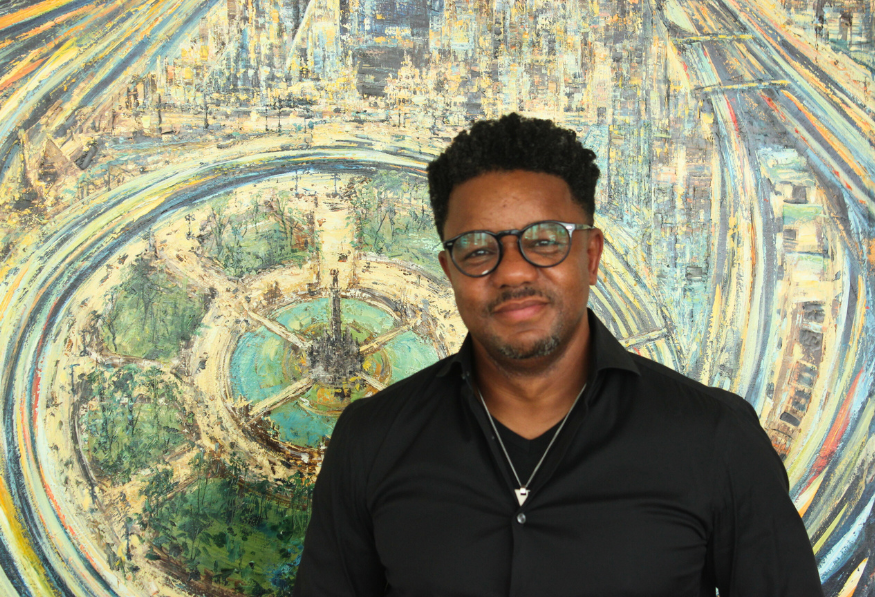

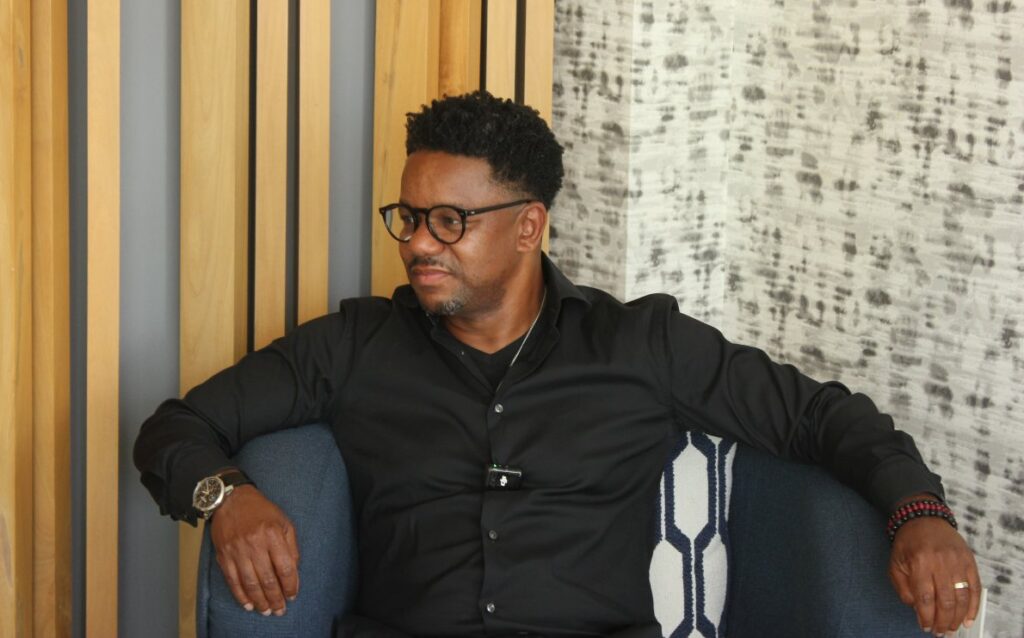
Stefon Harris es un músico, compositor y educador de jazz estadounidense, comprometido intrépidamente con la difusión del “poder de la empatía” a través de diferentes iniciativas como la música jazz, la educación, la tecnología y la creación de comunidades artísticas como codirector de Express Newark.
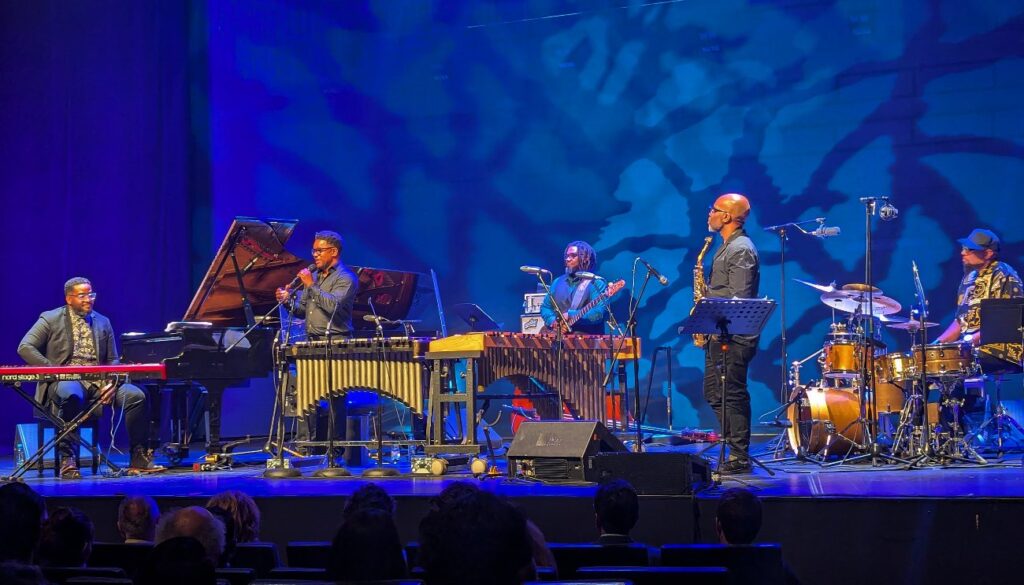
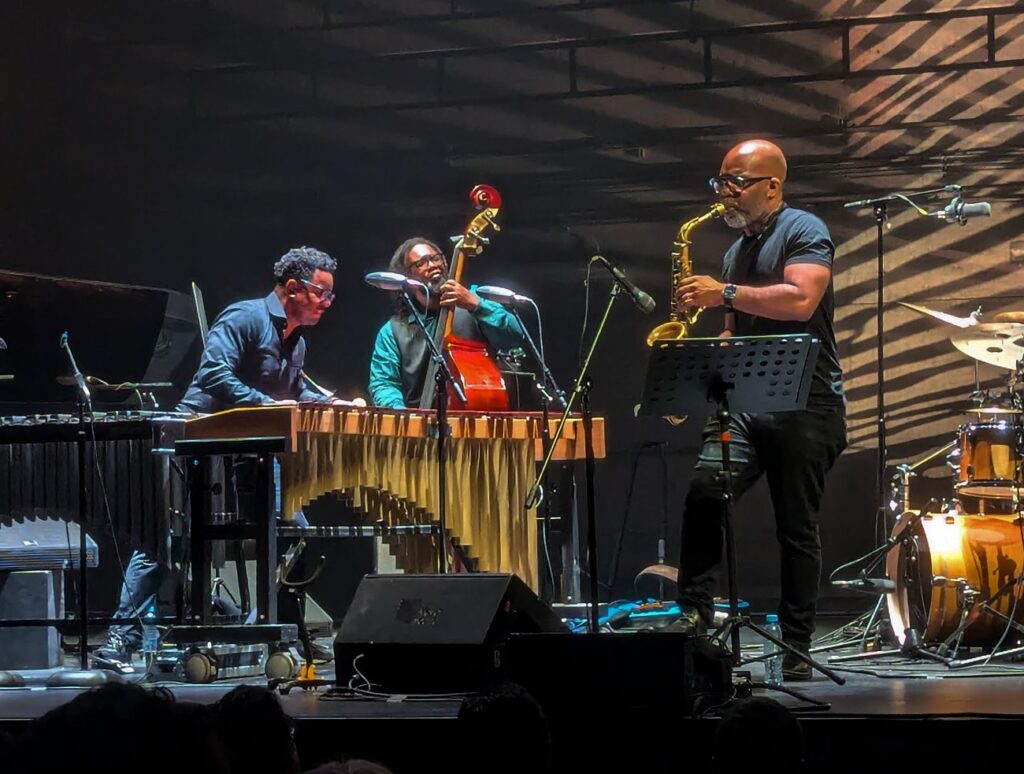
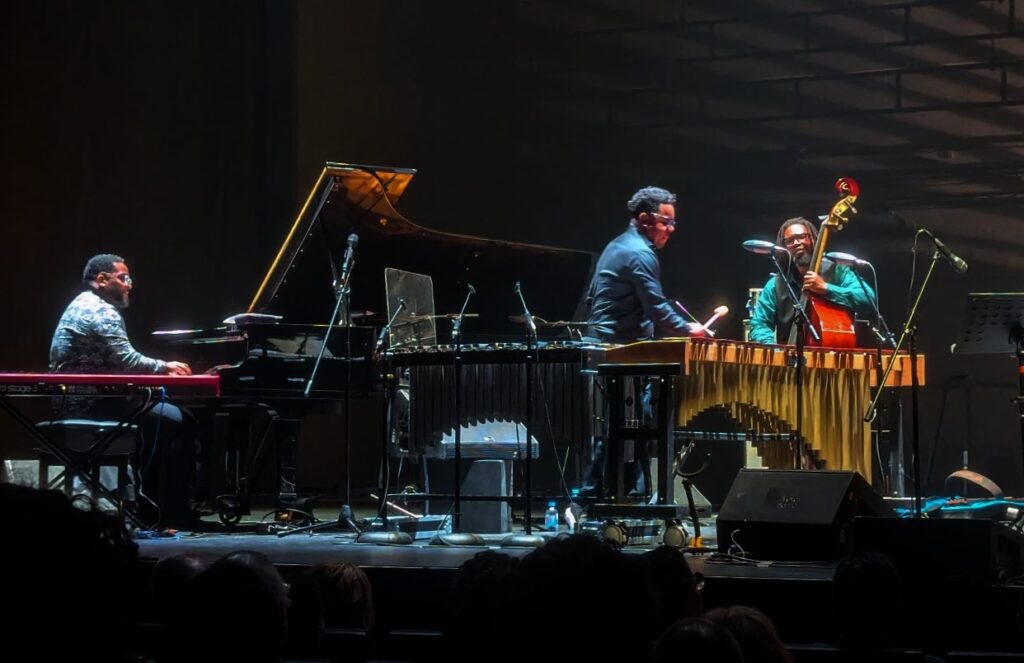
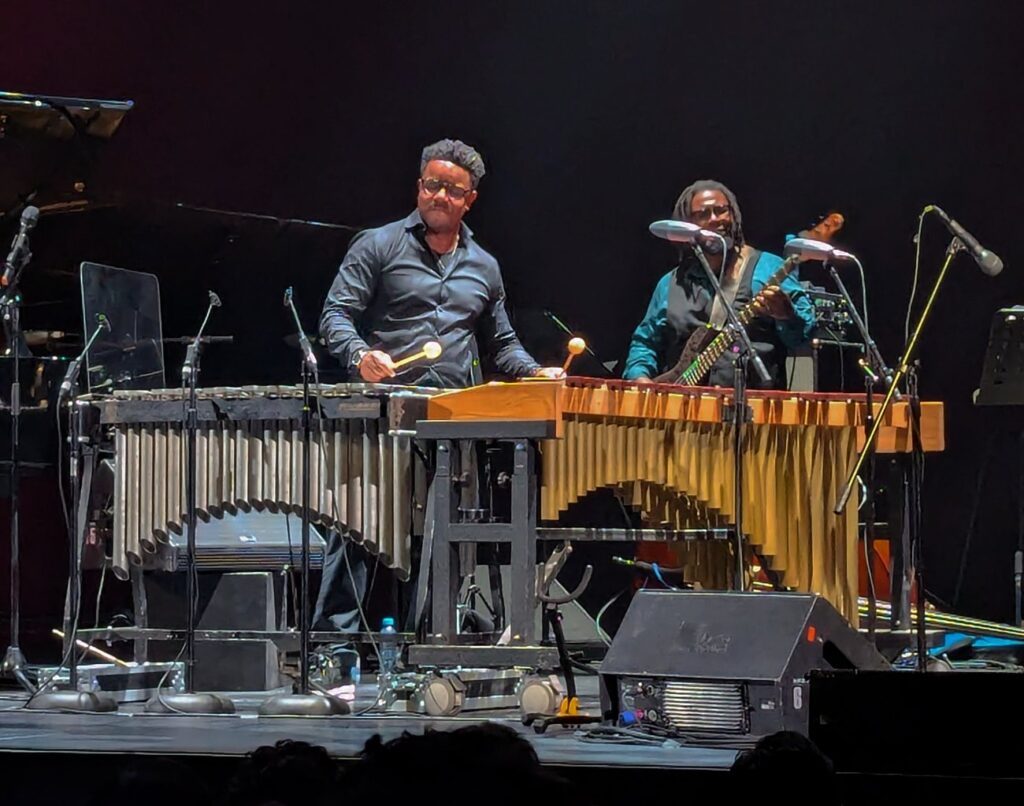
En otra destacada edición del ciclo New York Jazz All Stars, de DeQuinta Producciones. Stefon Harris & Blackout presentaron un concierto de jazz lleno de energía y musicalidad de alto nivel. Tuvimos el privilegio de sentarnos con Stefon para hablar sobre su relación con la música jazz, el vibráfono y sus esfuerzos como emprendedor de la aplicación Harmony Cloud.
Diego Sicilia: ¿Podrías hablarnos del ensamble Stefon Harris and Blackout, y de esta colaboración que se ha mantenido tan fuerte desde los días de tu catálogo en Blue Note?
Stefon Harris: Blackout ha estado juntos por más de veinte años, lo cual es algo raro en cualquier género musical. Creo que estamos unidos por nuestros orígenes culturales y porque nos amamos, confiamos y respetamos mutuamente. Así que la razón por la que estamos tan conectados es que, cuando nos reunimos, la voz de cada uno pasa al frente. Te sientes vivo. Esta no es una banda donde alguien le dice al otro qué hacer. Nos reunimos y, ocurra lo que ocurra, nos apoyamos mutuamente y permitimos que la magia suceda en vivo, frente al público.
DS: Cuando tienes a tantos músicos diferentes, ¿qué determina la dirección que quieres tomar en un nuevo disco y el mensaje general detrás de él, si es que hay uno o varios?
SH: Te diría que, en muchos sentidos, no creo que sea yo quien dicta la dirección de la música, sino más bien lo que está pasando en el mundo. Es lo que está disponible en ese momento. Si hay algo que está ocurriendo y lo siento en mi corazón, que necesito decir algo al respecto, tomo la pluma y empiezo a escribir.
Y lo otro que hace que la música suceda y determina la dirección siempre va a ser los miembros del ensamble. Cuando conoces a alguien y, por primera vez, tocan juntos, y surge esta chispa mágica, inmediatamente piensas: “Oh, deberíamos ir al estudio de grabación y documentar lo que estamos experimentando juntos para compartirlo con otras personas”.
Pero también estoy bien con que haya periodos en los que puedas pasar cuatro años sin sentir la necesidad de grabar, porque no me interesa hacer el mismo disco una y otra vez. Hay mucha música en el mundo. Hay muchos grandes libros en el mundo. Creo que lo que necesitamos son declaraciones y observaciones sobre lo que está pasando en nuestro mundo, que sean útiles para ayudarnos a vernos unos a otros. Ahí es cuando empieza. Es tiempo de hacer un álbum cuando tienes algo que aportar a esa narrativa.
La música es solo una herramienta. Lo que es más importante es el mensaje detrás de la música. Eso es lo que importa. Así que, para mí, puedo tener muchas ideas musicales, pero si no van a contar una historia pertinente, no necesito ponerlas sobre la mesa. En muchos sentidos, no me considero un músico. Me considero una persona que tiene un talento que se manifiesta bien en la música, pero que también se expresa de otras maneras. Lo que me mueve es que estoy dedicado a la difusión de la empatía a través de las artes. Así que, ya sea que esté enseñando, desarrollando aplicaciones o tocando música, estoy enseñando lo mismo que intento compartir desde el escenario.
Estoy tratando de enseñarnos a escucharnos unos a otros, a acallar el ego y a comprender el poder de la diversidad de pensamiento, cómo realmente podemos crear cosas mucho más grandes que cualquier individuo. Así que la música es solo una parte del camino. Es una de las herramientas más hermosas porque es un lenguaje universal y la gente puede sentirla más allá de la palabra. Es un vehículo especial para compartir el poder de la empatía.
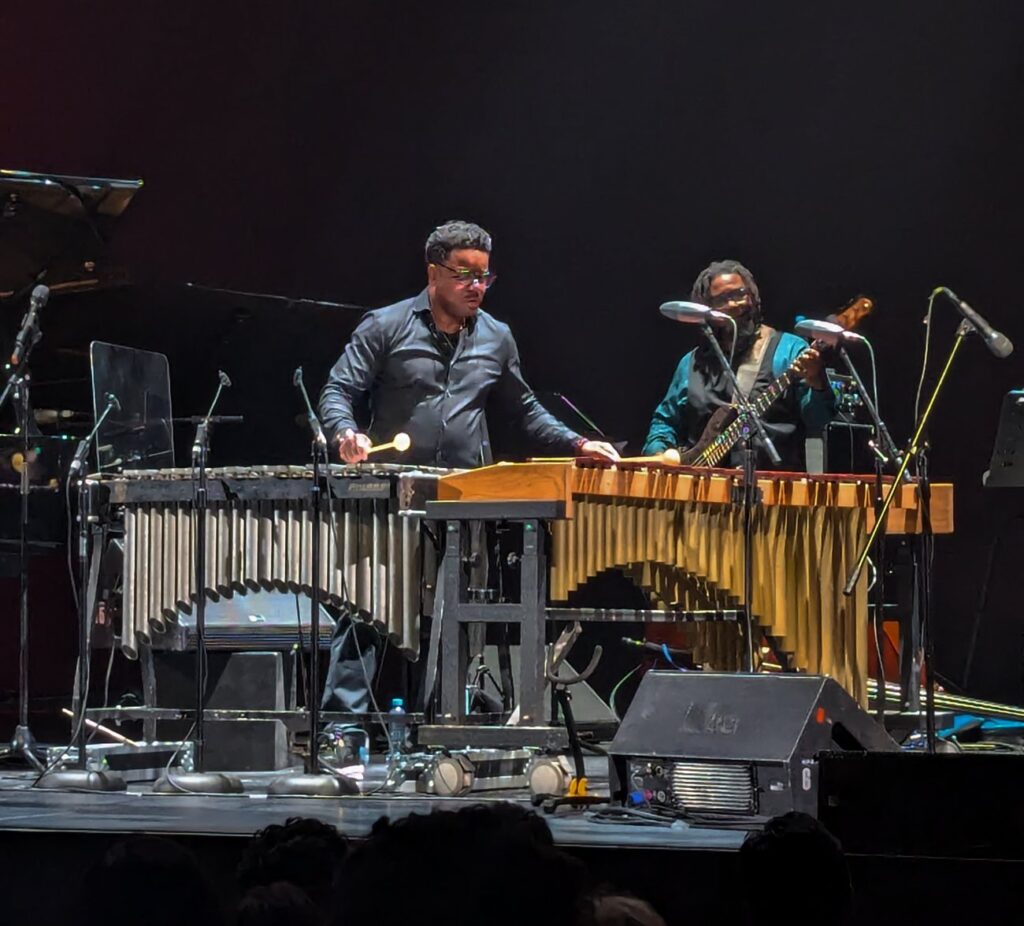
DS: Aquí en México tenemos una tradición especial con un instrumento muy familiar, la marimba, que se remonta más o menos a los siglos XVI y XVII, a la época colonial en México, todo el camino de regreso hasta el balafón en esas regiones de África. Pienso que, quizá porque nos es tan familiar, no nos damos cuenta de lo importante que han sido la marimba, el vibráfono y el xilófono para el desarrollo del jazz, de la música clásica contemporánea y demás. Espero que puedas arrojar algo de luz sobre esto: el vibráfono como conjunto y también tu relación como intérprete con el instrumento.
SH: Lo interesante es que el vibráfono es muy, muy joven. Tiene poco más de cien años y fue inventado en Estados Unidos. Pero mi formación, en realidad, es de música clásica desde el principio. Y mi primer instrumento de láminas fue la marimba. Recuerdo entrar a una secundaria, en séptimo grado, tenía como doce años, y ver una marimba. Me acerqué y la toqué de inmediato. Me enamoré al instante de ese sonido. Había algo tan hermoso en la marimba que sentía como si me estuviera reconectando con algo más grande que yo.
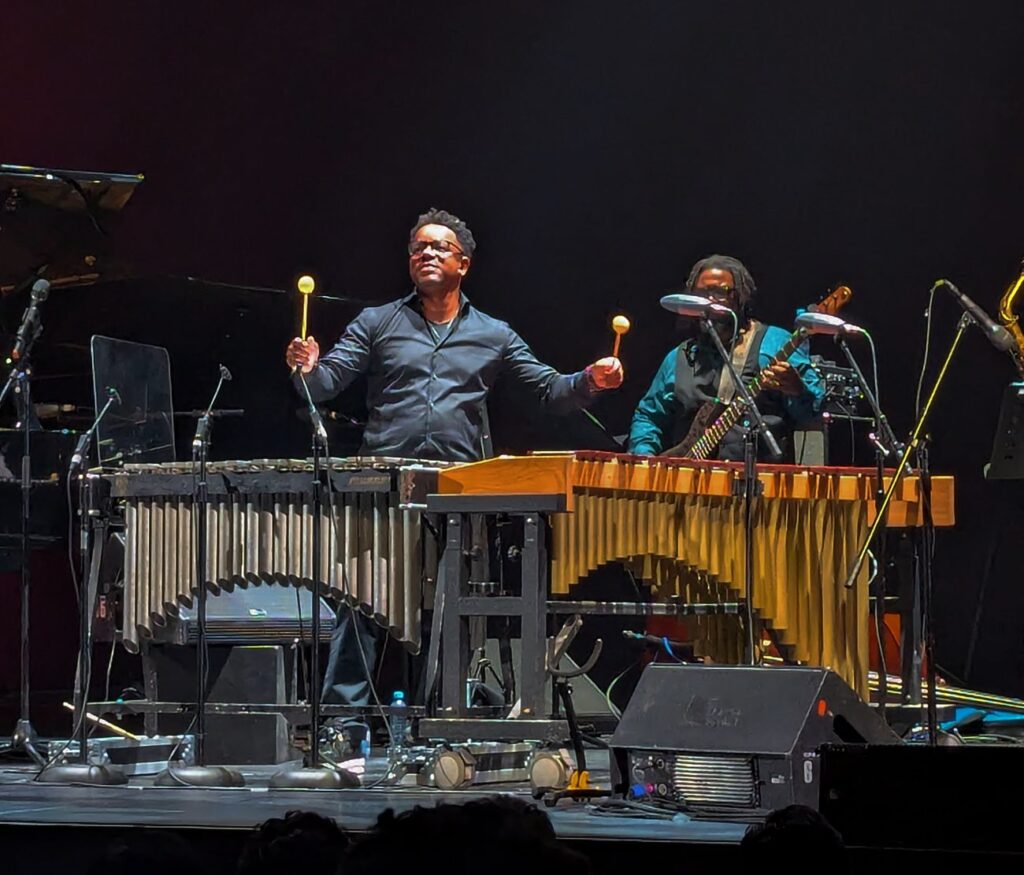
El vibráfono me encanta porque es hermoso, elegante y grácil. De hecho, creo que el vibráfono es un instrumento amable. Es extraño decirlo, pero no es un instrumento abrumador, sino más bien generoso. Así que me gusta tocar el vibráfono cuando estoy tocando melodías. Pero cuando empiezo a improvisar, estoy mucho más conectado con la marimba. Probablemente el noventa por ciento del tiempo, cuando improviso, improviso en la marimba. No quiero comparar ambos instrumentos porque funcionan muy bien juntos. Pero en términos de mi voz, me siento más profundamente conectado con la marimba.
DS: ¿Cómo crees que la música jazz puede ayudarnos a crear un sentido de unidad y empatía —como aludiste al principio— que de alguna manera nos ayude, nos reúna?
SH: El jazz es fascinante porque, fundamentalmente, en su ADN está la ciencia de la empatía. Si tienes a un grupo de personas en el escenario que piensan exactamente igual, no tienes jazz. Eso es un entorno controlado con resultados previsibles. Así que si piensas en las circunstancias culturales que dieron origen al jazz en Estados Unidos, estás viendo un entorno donde había personas esclavizadas traídas al país desde diversos lugares de África.
No necesariamente hablaban el mismo idioma. No necesariamente practicaban la misma religión. Así que tenía que haber una manera para que la gente cantara su verdad. Porque en Estados Unidos, durante una era como esa, si mostrabas que sabías leer, te mataban. Si hablabas de a quién amabas, te separaban. Así que necesitábamos un espacio para expresar lo que llevábamos en el corazón. Y la música fue ese espacio.
Creo que comenzó en reuniones religiosas, porque a las personas esclavizadas se les permitía reunirse para practicar su religión y tener un espacio propio. Y lo que ocurría era que te ponías de pie para contar tu historia, para testificar: “Así me siento, esto es lo que está pasando en mi vida en este momento”. Y todos los demás se sentaban alrededor y te apoyaban mientras contabas esa historia. Y luego, cuando terminabas, cuando habías podido cantar tu verdad, te sentabas y apoyabas a la siguiente persona para que sacara lo que llevaba en el corazón, lo que necesitaba decir. Esto es como tomar solos en el jazz, ¿verdad?
Un músico de jazz se pone de pie. Se supone que no debes copiar ni imitar. Si tienes treinta minutos a la semana para cantar lo que llevas en el corazón, no vas a copiar a alguien más. Vas a expresarte. Eso es lo que dio origen a la urgencia del jazz. Así que tienes culturas diversas juntándose. Y la música uniéndose con la necesidad de cantar su verdad. Por eso la música es tan significativa a nivel global. Porque todas las culturas forman parte de esta increíble plataforma que se creó en los Estados Unidos.
DS: Y me encanta que menciones el hecho de que los solos sean una forma de expresión. Pero también que todos los demás músicos, como dices, apoyen lo que esa otra persona está diciendo: su historia, lo que intenta comunicar, ¿no? Sirviendo como una plataforma de apoyo.
SH: Incluso recuerdo estar en la iglesia, y una de las cosas más increíbles que recuerdo de niño es que alguien se ponía de pie para testificar. Y decía: “Mi hermano estuvo enfermo la semana pasada, pero quiero que sepan que está bien”. Y entonces el organista tocaba un acorde de la nada, en el momento justo, en la tonalidad correcta. Y ella seguía contando su historia, pero empezaba a convertirla en notas. Y la música iba sucediendo en tiempo real. Siempre estaba en la tonalidad y el tempo adecuados. Pero siempre estaba ahí para amplificar lo que había en el corazón de las personas de la comunidad. Nunca se trataba de entretenimiento.
En la iglesia no estás sentado viendo a alguien cantar como si fuera un genio y por eso tuvieras que observar a ese genio. Esa no es la base cultural. De hecho, una de las cosas más hermosas del jazz es que te das cuenta de que tu éxito depende de las contribuciones de otras personas. Puedes tocar las mejores notas del mundo, pero si las demás personas a tu alrededor no están involucradas o si el público no se siente conectado, no surge esa magia.
DS: El hecho de que aludas a la cultura y a los valores del jazz… tengo una pregunta respecto a si crees que, ya sabes, yo como alguien externo —diría que como un outsider, alguien que no es de Estados Unidos pero que ama la música jazz— ¿crees que eso se pierde?
SH: Sí, creo que, a nivel global, cuando pensamos en el jazz, quizá nuestra comprensión del jazz carece un poco de esa conexión y ese entendimiento de la cultura, de los valores, de la unidad que rodea al jazz. Déjame explicarlo un poco. Creo que en mi caso llegué a esta música por interés musical, pero también por interés académico.
Cuando eres una persona que está aprendiendo a tocar un instrumento, estas nociones que pusiste sobre la mesa —sobre aprender a ser músico y cómo tocar una pieza— es importante aclarar estos principios básicos de los que hablamos. El orgullo y el swing básicamente son la realización de que esos fundamentos son lo que hace la música que queremos, la razón por la que elegimos lo que elegimos. Y también, la idea de Fannou Kay respecto a lo que representa el jazz y el jizz… creo que, quizá, no quiero decir que haya una falta porque esa no es la palabra adecuada, pero tal vez no haya un entendimiento tan profundo de esos valores culturales también.
Muchas veces la gente se obsesiona con el producto del jazz. Dicen: “Escuché este álbum y fue inspirador”. Pero esa no es necesariamente la magia del jazz; eso es una grabación de la magia del jazz. La magia del jazz está en el proceso, ocurre en tiempo real.
Si solo observas la música sin permitirte ser completamente vulnerable —e incluso sin participar directamente en la ciencia de la improvisación, ya sea con un instrumento o no— no creo que puedas entenderlo por completo hasta que te permitas esa libertad: ser vulnerable e improvisar. Y en términos de humanidad, no puedo imaginar una circunstancia donde el jazz no sea una música completamente vulnerable, y creo que esa es una gran pregunta.
Cuando dos personas están involucradas en el proceso creativo y están molestas entre sí —pueden estar teniendo una discusión terrible— pero en cuanto se involucran en un proceso creativo improvisado, no hay espacio para pensar en lo que pasó antes. No hay espacio para pensar en lo que pasará después. Solo existe la reacción directa, la conexión directa basada en lo que nos une. Creo que esa es una lección muy poderosa.
Y para mí, una de mis aspiraciones es poner la música en las manos de tantas personas como sea posible, no solo de músicos de élite. Y de hecho, mencionaste la marimba. Una de las cosas más poderosas sobre la marimba es que un niño puede acercarse, tomar una baqueta y golpear una nota, y básicamente va a estar afinada, va a sonar bien. Es un democratizador.
En cambio, si te acercas a una trompeta, probablemente no puedas sacar ni un sonido. Así que es un instrumento perfectamente adecuado para crear comunidad, para crear un espacio de encuentro. Varias personas pueden tocar un mismo instrumento al mismo tiempo. Y también creo que es una gran manera de que la gente descubra de inmediato los dones que viven dentro de ellos. No es una barrera; es un instrumento maravilloso.
DS: Y ya mencionaste un poco tu papel como músico en este sentido también, pero ¿podrías quizá expandir sobre eso? Empezaré por el hecho de que tú mismo eres una institución para el vibráfono y un artista tan celebrado. ¿Cuál es, digamos, tu objetivo con tu música? Y, no hablando por todos, sino solo por ti mismo, ¿qué te gustaría lograr a nivel de mensaje con tu música y compartirlo con el resto del público?
SH: Hay muchos mensajes. Hay muchas cosas que necesitamos en el mundo. No tengo todas las respuestas, pero puedo observar y compartir desde el corazón. Y para mí, la música es solo una herramienta. Otra de las cosas que hago en mi carrera es capacitación corporativa en liderazgo, y hablo sobre dinámicas de liderazgo: cómo construir un equipo, cómo crear un ambiente seguro para que las personas que trabajan contigo se sientan cómodas dando lo mejor de sí mismas.
Lo asombroso de la música es que puedes demostrar esa lección sin decir una sola palabra. Y yo lo siento. Porque si subo al escenario y controlo la música, y le digo a mi baterista, Terry Anguli: “Necesito que hagas esto”, si le digo al pianista: “Necesito que hagas aquello”, la música va a sonar bien, pero nunca va a sonar viva. Nunca va a sonar mágica.
Ese es un estilo de liderazgo, uno donde estás microgestionando. Pero hay un valor increíble en entender que el papel del liderazgo, en realidad, consiste en dar un paso atrás, poder escuchar lo que ocurre a tu alrededor y encontrar una manera de conectar esas ideas. Así que puedo demostrar la microgestión a través de la música y los problemas que conlleva.
También puedo demostrar la idea de un estilo de liderazgo más empático y amoroso, y puedes escuchar y sentir los beneficios de eso. Ese es solo uno de los mensajes que aspiro a compartir con el mundo. Pero, fundamentalmente, creo que el primer paso —no es la solución a todos nuestros problemas, desde luego— pero el primer paso para resolver los desafíos que enfrentamos globalmente es la empatía.
Dejemos el ego a un lado. No se trata de lo que tú piensas. No se trata de lo que tú quieres. No hay correcto o incorrecto. Es simplemente: cálmate. Observa. ¿Qué está pasando realmente? ¿Qué está diciendo esa persona? ¿De dónde viene? Luego puedes formarte una opinión.
Pero cuando lideras de esa manera, la otra persona se siente escuchada. Y cuando alguien se siente escuchado, se siente amado; entonces está dispuesto a escuchar. Cuando ambas partes llegan chocando con toda su fuerza —ya sean países o individuos— es demasiado difícil. Así que espero que podamos demostrar valores como esos a través de la hermosa ciencia de la música.
Una de las cosas más hermosas del jazz es que te das cuenta de que tu éxito depende de las contribuciones de otras personas. Puedes tocar las mejores notas del mundo, pero si las demás personas a tu alrededor no están involucradas o si el público no se siente conectado, no surge esa magia.
Stefon Harris
DS: Entiendo que, trabajando yo también en este tipo de entorno, no todos los estilos de liderazgo son adecuados para todas las personas. No todas las situaciones son adecuadas para todos. Pero sí creo que es importante brindar un espacio seguro para que todos puedan mostrar sus vulnerabilidades y ver qué es lo que tiene más sentido para cada quien. Así podemos entender las partes fuertes y las áreas de oportunidad de cada persona.
SH: Esta obsesión con ser creativos… lo que pasa cuando tenemos esta obsesión a nivel individual es que en realidad limita a la humanidad. Porque lo que podemos hacer colectivamente es mucho más grande que lo que podemos hacer individualmente. Cuando empezamos a cambiar esa mentalidad, que la verdadera forma de arte, la verdadera forma de arte consiste en elevar a tantas personas como sea posible, colectivamente creo que el potencial de la humanidad para sobrevivir, crecer y prosperar será mucho mayor que si nos enfocamos en los genios y en los individuos.
DS: Quisiera pasar a hablar un poco del hecho de que, como mencionó, también está trabajando en emprendimiento tecnológico. Sé que tiene muchos proyectos en marcha con la aplicación Harmony y otros desarrollos en los que está trabajando. ¿Podría compartir con nosotros de qué trata Harmony App y qué otros proyectos tiene actualmente? ¿Y si sabe básicamente sobre su disponibilidad y todo eso?
SH: La aplicación que tengo se llama Harmony Cloud. Y no tengo ningún tipo de formación en ciencia computacional. Pero estuve enseñando durante muchos, muchos años en NYU y en un par de otras grandes universidades en Estados Unidos. Y enseñaba a las personas a sentir la música, no solo la teoría. Y conocí a un ingeniero que casualmente estaba viendo una de mis clases. Empezamos a hablar y él dijo: “Me pregunto si hay alguna manera en que podamos trabajar juntos para darte una herramienta que ayude a las personas a sentir la música”. Así que quise desafiarme a mí mismo para ver si podía crear una herramienta que ayudara a las personas a desarrollar su capacidad de escuchar.
Llevo diez años trabajando en esto. Tengo un algoritmo patentado que de hecho puede improvisar. Como si estuviera en el piano en un cuarto contigo, básicamente puedo improvisar. Descargué mi cerebro en un software y puede improvisar en el piano como si yo estuviera ahí contigo. Esa aplicación, su versión actualizada, estará disponible para finales del verano.
DS: ¿Cómo crees que la tecnología, quizá a través de aplicaciones, podría impulsar la creatividad de los músicos de jazz actuales y futuros?
SH: Depende de la intención de la persona que la crea, ¿verdad? La tecnología puede ser buena. La tecnología puede generar desafíos dependiendo de cómo los humanos decidan usarla. Obviamente, la inteligencia artificial es una parte muy significativa de nuestro mundo, y está creciendo exponencialmente.
Creo que puede aprovecharse para desafiarnos a desarrollar nuestros instintos, a ampliar nuestra capacidad de ser seres humanos más perceptivos. Puede desafiarnos a convertirnos en seres humanos más empáticos. También puede provocar guerras, ¿cierto? Así que, para mí, estoy adoptando la IA como una herramienta que puedo usar al servicio de hacer lo mejor posible para impulsar el crecimiento de la humanidad y el crecimiento de las personas. Y para fomentar la empatía en el mundo.
DS: Me gustaría preguntarle si podría compartir cuáles son los próximos proyectos, musicales o no musicales, en los que quizá esté trabajando actualmente y que pueda compartir con nosotros, por favor.
SH: Claro. El proyecto más importante es que, para finales del verano, mi aplicación Harmony Cloud estará disponible en las plataformas de iOS. De nuevo, son diez años de trabajo, así que estoy muy emocionado por eso. Tengo otro álbum llamado Legacy Dances que saldrá en 2026.
Y también acabo de convertirme en el director ejecutivo de una organización en Newark, Nueva Jersey, llamada Express Newark. Somos un centro de arte de cincuenta mil pies cuadrados. Tenemos una galería de arte, estudios de fotografía, impresión 3D, estudios de música. Y está en colaboración con la Universidad Rutgers. Nuestro objetivo es enseñar a la comunidad las herramientas que necesitan para expresar su verdad. Así que pueden entrar a nuestro espacio sin costo alguno.
Les ofrecemos clases y lecciones gratuitas, creamos oportunidades de presentación para ellos, y no solo para músicos de alto nivel. Puedes entrar sin saber absolutamente nada, y algunos de los mejores profesores del mundo estarán allí para servirte. Esto está muy cerca de mi corazón. Es un sueño para mí contextualizar la posibilidad del arte como un servicio a la humanidad.
English version
Stefon Harris: «I can’t imagine a circumstance where jazz isn’t a completely vulnerable form of music»
Stefon Harris is an American jazz musician, composer and educator, who is fearlessly committed to spreading the “power of empathy” through different endeavors like jazz music, education, technology, and art community building as Co-Director of Express Newark.
In another outstanding edition of the New York Jazz All Stars cycle, by DeQuinta Producciones. Stefon Harris & Blackout presented a jazz concert full of energy and high level musicianship. We had the privilege of sitting down with Stefon to talk about his relationship with jazz music, the vibraphone, and his endeavors as entrepreneur for Harmony Cloud app.

Diego Sicilia: Can you please talk to us about the Stefon Harris and Blackout ensemble, and this collaboration that has been going strong since the days of your Blue Note catalog.
Stefon Harris: Blackout has been together for over 20 years, which is rare in any genre of music. I think we’re bonded together because of our cultural backgrounds and because we love, trust, and respect one another. So, the reason that we’re bonded is because when we come together, everybody’s voice is brought to the forefront. You feel alive. This is not a band where anyone tells the other person what to do. We come together and whatever happens, we support one another and allow the magic to occur live in front of an audience.
DS: Each record of this band is so different and unique, when you have so many different musicians, what dictates the direction that you want to take on a new record and the overall message behind it, if there’s one or many.
SH: I would tell you in a lot of ways, I don’t think it’s me who’s dictating the direction of the music, but rather what’s happening in the world. It’s what’s available at that moment. If there’s something that’s happening and I feel it in my heart that I need to say something about it, I’ll pick up the pen and start writing.
And the other thing that makes the music happen and determines the direction, it’s always going to come down to the members of the ensemble. When you meet someone and for the very first time you play together and there’s this magic spark. Immediately you’re thinking, “oh, we should go into the recording studio and document what we are experiencing together to share it with other people”.
But I’m also okay with there being periods where you might go four years and not feel the need to record, because I’m not interested in doing the same album over and over again. There’s lots of music in the world. There are lots of great books in the world. I think what we need are statements and observations about what’s happening in our world that are useful to help us be able to see one another. That’s when it starts. When it’s time to make an album, when you have something to contribute to that narrative.
Music is only a tool. What’s more important is the message behind the music. That’s what matters. So for me, I may have lots of musical ideas, but if it’s not going to tell a pertinent story, I don’t need to put it forward. In a lot of ways, I don’t think of myself as a musician. I think of myself as a person who has a talent that manifests itself well in music, but it comes out in other ways as well.
What drives me is that I’m dedicated to the proliferation of empathy through the arts. So whether I’m teaching, developing apps, playing music, I’m teaching the same thing that I’m trying to share from the stage. I’m trying to teach us how to listen to one another, how to quiet the ego and understand the power of diversity of thoughts, how we can really create things much bigger than any one individual.
So music is just a part of the journey. It’s one of the most beautiful tools because it’s a universal language and people can feel it beyond the word. So it’s a special vehicle for sharing the power of empathy.
DS: Here in Mexico we have a special tradition with a very familiar instrument—the marimba—which goes back to roughly the 16th and 17th centuries, and further back to the balafon in parts of Africa. Because it’s so familiar to us, we sometimes forget how important the marimba, vibraphone, and xylophone have been to the development of jazz, contemporary classical music, and more. I was hoping you could shed some light on the vibraphone as an instrument, and also on your relationship with it as a performer.
SH: What’s interesting is that the vibraphone is very, very young. It’s just over 100 years old and was invented in the United States. But my background actually is in classical music early on. And my first mallet instrument was the marimba.
I remember walking into a middle school in seventh grade. I was like a year or so, and seeing a marimba and walking up to it and playing it just right away. I fell in love with that sound. There was something so beautiful about the marimba that felt like I was reconnecting to something bigger than me.
The vibraphone I love because it’s beautiful, It’s elegant and graceful. I actually think the vibraphone is a kind instrument. It’s a strange thing to say, but it’s not an overpowering instrument, but rather generous. So I like to play the vibraphone when I’m playing melodies.
But when I start to improvise, I’m so much more connected to the marimba. Probably 90% of the time when I’m improvising, I improvise on the marimba. I feel like there’s something that’s… I don’t want to compare the two instruments because they work well together. But in terms of my voice, I feel more deeply connected to the marimba.
DS: How do you think jazz music can help us create a sense of unity and empathy—as you alluded to in the beginning—that can help bring us together?
SH: Well, jazz is fascinating because fundamentally in its DNA is the science of empathy. If you have a bunch of people on stage together who think exactly the same way, you don’t have jazz. That’s a controlled environment with predictable outcomes. So if you think about the cultural circumstances that gave birth to jazz in the United States, you’re looking at an environment where you have enslaved people brought to this country from various countries in Africa.
They didn’t necessarily speak the same language. They didn’t necessarily practice the same religion. So there needed to be a way for people to sing their truth. Because in the United States during an era like that, if you showed that you could read, you would be killed. If you talked about who you loved, you would be separated. So there’s something that we needed a venue to express what was on our hearts. And music was the venue.
I think it started in religious gatherings because the enslaved people were allowed to gather to practice religion and have space alone. And what would happen is you would stand up to tell your story, you would testify “This is how I’m feeling. This is what’s going on in my life right now”. And everyone else would sit around and they would support you telling that story. And then when you were done, you were able to sing your truth, you would sit down and support the next person to get off what was on their heart, what they needed to say. This is like taking solos in jazz, right?
A jazz musician stands up. You’re not supposed to copy or imitate. If you have thirty minutes a week to sing what’s on your heart, you’re not going to copy someone else. You’re going to express yourself. That’s what gave birth to the urgency of jazz. So you have diverse cultures coming together. And the music is coming together with the need to sing their truth. That’s why the music is so significant globally. Because all cultures are a part of this incredible platform that was created in the United States.
Many times people obsess about the product of jazz. Meaning, I listened to this album and it was inspiring. That’s not necessarily the magic of jazz, that’s a recording of the magic of jazz. The magic of jazz is in the process; it’s in real real time.
Stefon Harris
DS: And I love that you say the fact of solos being an expression. But all the other musicians also, as you say, supporting whatever this other person is saying, their story, what they are trying to communicate as well, right? And serving as a platform of support.
SH: I even remember being in the church, and one of the most amazing things I remember as a child, is someone would stand up to testify. And she would say, you know, my brother was sick last week. But I want to let you know he’s all right. And then the organist would just play a chord out of nowhere at the right moment in the right key. And then she would keep telling her story. But she would start turning it into notes. And the music was happening in real time. But it was always in the right key and time. But it was always there to amplify what was on the hearts of the people in the community. It was never about entertainment.
Like in church, you’re not going to sit there and watch someone sing. Like you’re a genius and therefore I should watch this genius. That’s not the cultural foundation. In fact, that’s one of the beautiful things about jazz is that you realize your success is predicated upon other people’s contributions. You can play all the greatest notes in the world. But if the other people around you aren’t engaged or if the audience doesn’t feel connected, you don’t get that magic.
DS: That is so interesting. And actually the fact that you allude to the culture and the values of jazz. I have a question: as an outsider myself, as someone who isn’t from the United States but loves jazz. Do you think that cultural connection can get lost?
SH: Yes. I think that globally, when we think about jazz, our understanding can sometimes lack that connection to the culture, the values, and the sense of unity that surrounds it. Let me explain a bit. In my case, I came to this music through musical interest, but also academic interest.
When you’re learning to play an instrument, it’s important to clarify these basic principles we talk about—and to recognize that fundamentals like pride and swing are part of what shapes the music we choose and why. And there are also ideas—like Fannou Kay’s—about what jazz represents. I don’t want to call it a ‘lack,’ but perhaps the deeper cultural values aren’t always as fully understood.
Many times people obsess about the product of jazz. Meaning, I listened to this album and it was inspiring. That’s not necessarily the magic of jazz, that’s a recording of the magic of jazz. The magic of jazz is in the process; it’s in real real time.
If you’re just observing the music and not really allowing yourself to be fully vulnerable—and I think even participating directly in the science of improvisation whether it’s with an instrument or not, I don’t think you can fully understand it until you take a chance to be free, vulnerable, and improvise.
But in terms of humanity, I can’t imagine a circumstance where jazz is not a music that is fully vulnerable and I think that’s a great question. If two people are engaged in the creative process and they’re upset with each other you could be having a horrible argument and as soon as you engage in an improvised creative process there’s no space to think about what happened in the past, and no space to think about what will happen in the future.
There is only direct reaction—direct connection based on what connects us —so I think that’s a very powerful lesson. And for me one of my aspirations is to put music in the hands of as many people as possible, not just elite musicians.
And actually you mentioned the marimba, one of the most powerful things about the marimba is that a child can walk up to a marimba, pick up a mallet and hit a note and it’s basically going to be in tune, it’s going to sound pretty good. It’s a democratizer, whereas if you walk up to a trumpet, they probably can’t get a sound out.
So it’s actually an instrument that is perfectly situated to create community, to create a gathering space. Multiple people can play on one instrument together and I also think it’s a great way for people to immediately discover the gifts that live in them. It’s not a barrier, it’s an amazing instrument.
DS: You’ve already alluded to your role as a musician in this regard, but could you expand on that? You’re an institution on the vibraphone and such a celebrated artist—what is your goal with your music? Not speaking for everyone, but for yourself: what would you like to achieve message-wise with your music, and share with audiences?
SH: So there are many messages. There are many things that we need in the world. I don’t have all the answers, but I can observe and share from the heart. And for me, music is just a tool. So one of the other things that I do in my career is I do corporate leadership training and I talk about leadership dynamics, how to build a team, how to build a safe environment so that the people who work for you feel comfortable giving the best of themselves.
The amazing thing about music is you can demonstrate that lesson without a single word. And I feel it. So if I come on stage and I control the music and I tell my drummer, Terry Anguli, I need you to do this, if I tell the pianist, I need you to do that, the music will sound good, but it’ll never sound alive. It’ll never sound magical.
So that’s one leadership style where you’re sort of micromanaging, but there’s an incredible value in understanding that the role of leadership is actually about taking a step back, being able to hear what’s happening around you and figuring out a way to connect those ideas.
So I can demonstrate sort of micromanaging through music and the pitfalls of that. I can also demonstrate the idea of a more empathetic, loving leadership style and you can hear and feel the benefits of that. So that’s just one of the messages that I aspire to share with the world. But fundamentally, I think the first step, it’s not the solution to all of our problems certainly, but the first step towards solving these challenges that we’re facing globally is empathy.
Let’s put the ego aside. It’s not about what you think. It’s not about what you want. There’s no right or wrong. It’s simply calm down. Let’s observe. Like what’s actually happening? What is that person actually saying? Where are they coming from? Then you can form an opinion.
But what happens when you lead like that, the other person feels heard. Once someone feels heard, they feel loved, they’re willing to listen. When you’re both coming at each other full steam, whether it’s countries or individuals, it’s too difficult. So I hope that we can demonstrate values like that through the beautiful science of music.
DS: I understand—working in this kind of environment as well—that not all leadership styles fit all people, and not all situations call for the same approach. But I do think it’s important to create a safe space so everyone can show their vulnerabilities and find what makes the most sense for them. That way we can understand each person’s strengths and areas of opportunity.
SH: This obsession with being creative. What happens when we have this obsession at an individual level is that it actually limits humanity. Because what we can do collectively is so much bigger than what we can do individually. When we start to have that shift in our mindset that the real art form, the real art form is not going to be the same as the real art form. It’s about elevating as many people as possible. Collectively, I think the potential for humanity to survive and grow and thrive is going to be much better than if we’re focusing on geniuses and individuals.
DS: I’d like to talk about the fact that, as you mentioned, you’re also working in technology entrepreneurship. You have the Harmony app and other developments—could you share what Harmony is about and what you’re currently working on?
SH: The app I’m building is called Harmony Cloud. I don’t have a background in computer science, but I taught for many years at NYU and a couple of other great universities in the U.S. I was teaching people to “feel” music, not just understand theory. I met an engineer who happened to be watching one of my classes, and we started talking about whether we could build a tool that helps people develop their ability to listen.
I’ve been working on it for ten years. I have a patented algorithm that can actually improvise—as if I were at the piano in a room with you. In a sense, I downloaded my brain into software, and it can improvise at the piano as if I were there. The updated version of the app will be out by the end of the summer.
DS: How do you think technology—perhaps through apps—could boost the creativity of current and future jazz musicians?
SH: So it depends on the intention of the person who creates it, right? Technology can be good. Technology can create challenges depending on how humans decide to use it. Obviously, AI is a very significant part of our world. And it’s growing exponentially. I think that it can be leveraged to challenge us to grow our instincts. To grow our ability to be more perceptive human beings.
It can challenge us to become more empathetic human beings. It can also cause wars. So for me, I’m embracing AI as a tool that I can use in service of doing the best that I can to empower humanity to grow and to empower people to grow. Right? And to empower empathy in the world.
DS: Before we wrap up, could you share any upcoming projects—musical or nonmusical—that you’re currently working on?
SH: Sure. So the biggest project is by the end of the summer my app Harmony Cloud will be out on iOS platforms. Again, ten years of work. So I’m really excited about that. I have another album called Legacy Dances that will be out in 2026.
And I also just became the executive director of an organization in Newark, New Jersey called Express Newark. So we’re a 50,000 square foot art center. We have an art gallery. We have photography studios, 3D printing, music studios. And it’s in partnership with Rutgers University. And our goal is to teach people in the community the tools that they need to sing their truth.
So they come into our space free of charge. We’re giving them free classes, free lessons, creating performance opportunities for them, but not just high level musicians. You can walk into our space and know nothing at all. And some of the best professors in the world will be there to be of service. So this is on my heart. It’s a dream of mine to contextualize the possibility of art to be of service to humanity.